

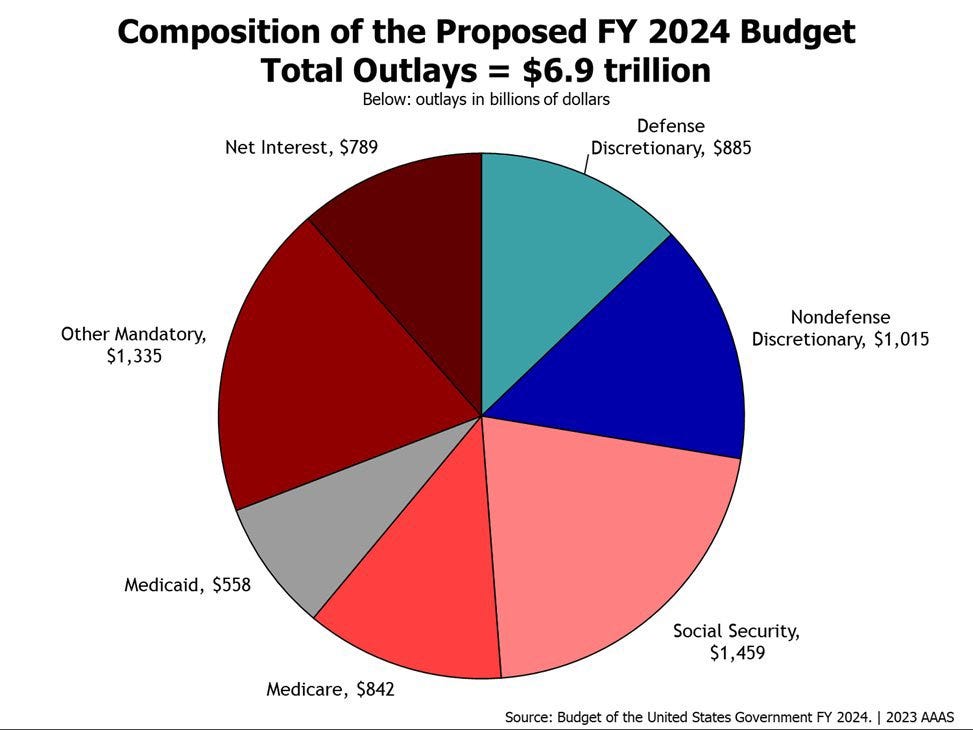
Chances are that you have encountered the argument that the Department of War should be downsized, so that schools can have the money. According to this logic, the only thing that can solve the crisis of public education is an infinite supply of money. When we value schoolteachers enough to pay them more than defense contractors, all of our social ills will be solved.
It is a lie. It has always been a lie. The United States spends more on Social Security than defense. Although the federal share of funding for schools is small, on average, federal funding already benefits high-poverty districts more than wealthy districts, and accounts for a substantial share of revenue in some districts, according to a recent report from the Brookings Institution.
Unlike other analyses on the topic, the report both includes federal spending and leaves out local cost of living adjustments. The results show that schools in high-poverty, non-white districts spend more per student than wealthier, whiter districts, and that this higher cost goes to labor, i.e. teachers.
Contrary to the hypothesis that infinite money will fix the schools, “high-spending states do not produce systematically better educational outcomes”, the report finds.
The average deviation of districts’ spending from the own-state average was relatively constant until about 1995 for all quintiles. After 1995, the distribution of spending within states shifted considerably towards the highest non-white-share districts and away from the lowest non-white-share districts, similar to trends by poverty quintiles. In 2021, predominantly non-white districts spent $2,500 per pupil more and predominantly white districts spent over $1,000 less than their state’s average.
Across all 50 states, the worst-performing districts spent more per student on average, while the best-performing districts spent less per student than average. The report finds “that the least-white districts spent substantially more than the whitest districts” consistently for the last three decades.
The assumption in the ‘infinite money’ argument — that sufficient federal spending can fix the inequality of outcomes in data — is demonstrably false. Of course, that does not stop people from continuing to believe it is true, anyway. Unionized teachers in particular have no incentive to believe otherwise, which points to the actual source of the crisis in public education.
