

'White Supremacy Culture' At The Smithsonian
The history behind a brutal committee questioning
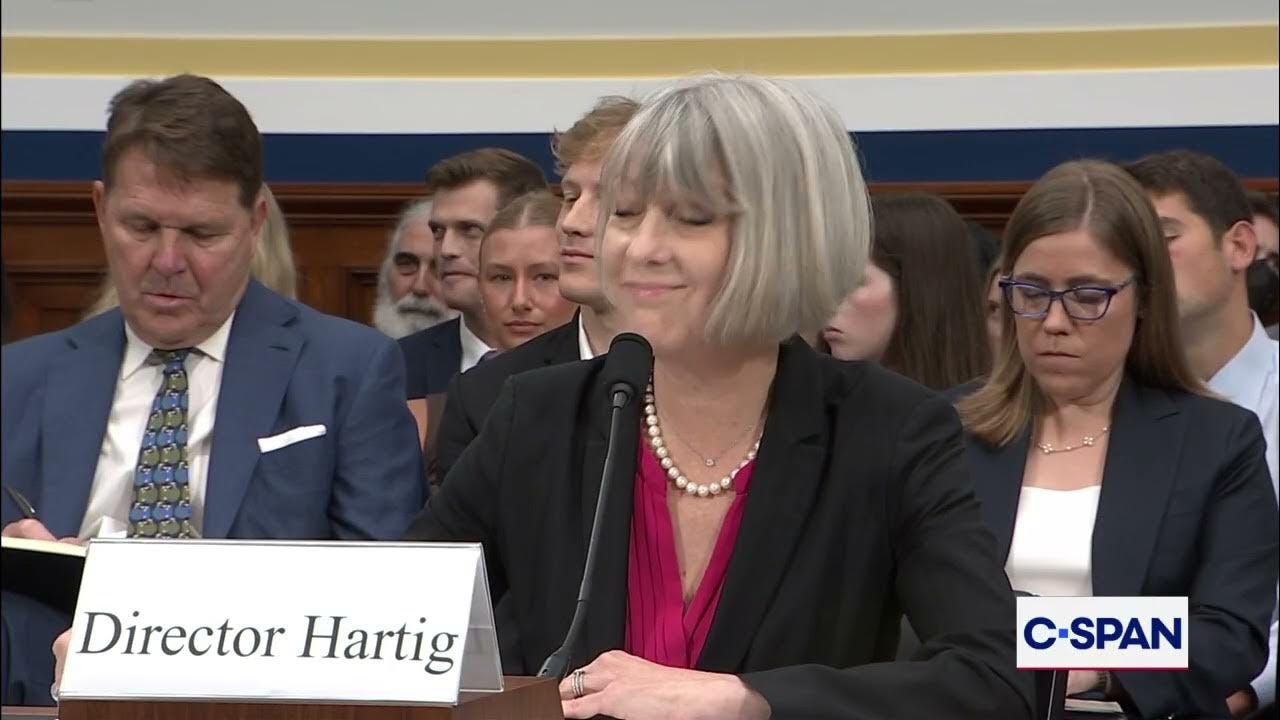
During a hearing by the House Oversight Committee yesterday, Rep. Brandon Gill of Texas grilled Anthea M. Hartig, director of the Smithsonian National Museum of American History since 2019. She is the tenth director in the history of the museum and its first female director since it opened in 1964.
Like the Smithsonian itself, the history of American desegregation began with decisions by President Eisenhower and culminated with President Johnson in the Civil Rights Act of 1964. The prohibition of race-based hiring in all federal employment is exactly the same age as the institution. White supremacy has never shaped the Smithsonian or been part of the internal culture.
At least, not until the last several years. “Ma’am, are you a white supremacist?” Rep. Gill asked Hartig, who denied it. “Can you help me square why your organization says that being polite is part of being a white supremacist?” Gill asked. Hartig was caught up by her initial agreement with Rep. Gill that politeness is a social good. This seemingly innocuous point shows how contentious the MASS Action (Museum As Site for Social Action) toolkit has been.
Developed by woke museum curators during 2017, the toolkit is pseudoscholarship. It draws on a knowledge base of progressive email forwards from 1999. I am not joking about this. The idea that politeness comes from ‘white supremacy culture’ originated with an exasperated rant by activist Tema Okun.
“White Supremacy Culture”, her essay, cites no research. Okun listed the supposed traits of white supremacy culture within organizations and ended up listing the characteristics of successful professional organizations, the real origin of her frustrations. Okun complains that whites use etiquette as an excuse to avoid difficult conversations, primarily around race, which is something only an activist would ever say.
In the world of self-important progressives, this is called problematizing. The activist wants to radicalize the rest of society by revealing underlying, hidden structures of power and meaning. Rep. Gill presented Hartig with examples of the Smithsonian problematizing American history and cultural curation. It was a short, sharp, and incisive five minutes that ended with the question: “Are you a white supremacist?” Watch Rep. Gill problematize the Smithsonian:
Hartig denied responsibility for creating the MASS toolkit. It is in fact the creation of an activist organization called “The Incluseum”, a name that speaks to its origins in the febrile post-Ferguson era of Black Lives Matter. Mike Murawski, who co-founded Museums Are Not Neutral, rejects the idea that museums should be neutral. We have to uproot the white supremacy from the museums, which requires us to get rid of the objectivity. It should not have been used by the Smithsonian for internal training.
“White supremacy thrives within this tyranny of the universal, the neutral, the apolitical, the fair and balanced, and the objective”, Murawski has written. “Acknowledging that museums are not neutral is a meaningful and urgent step toward gaining awareness of the powerful role that these forces play within these institutions.”
We must radicalize the institutions first, then remove the white supremacy that surely inhabits them. That way, the curation will achieve historical equities, much like jihadis smashing archaeological treasures achieve historical equities. Equity, decolonization, and social justice are key concerns of the MASS toolkit. Museum visitors will be radicalized into undermining the white supremacy everywhere by “questioning it, interrupting it, and being a part of taking transformative action to replace it.”
The solutions for white supremeness are suggested in its supposed characteristics. Laziness and irresponsibility are anti-whiteness, while foresight, planning, endurance, and independence are racism. Being on time is racism. Being married to your baby’s momma is racism. Boundaries are racist, criminality is anti-whiteness. The western canon must be abolished, Bowdlerized, Chris Nolanized. Science is racist against Native American beliefs. It’s all there.
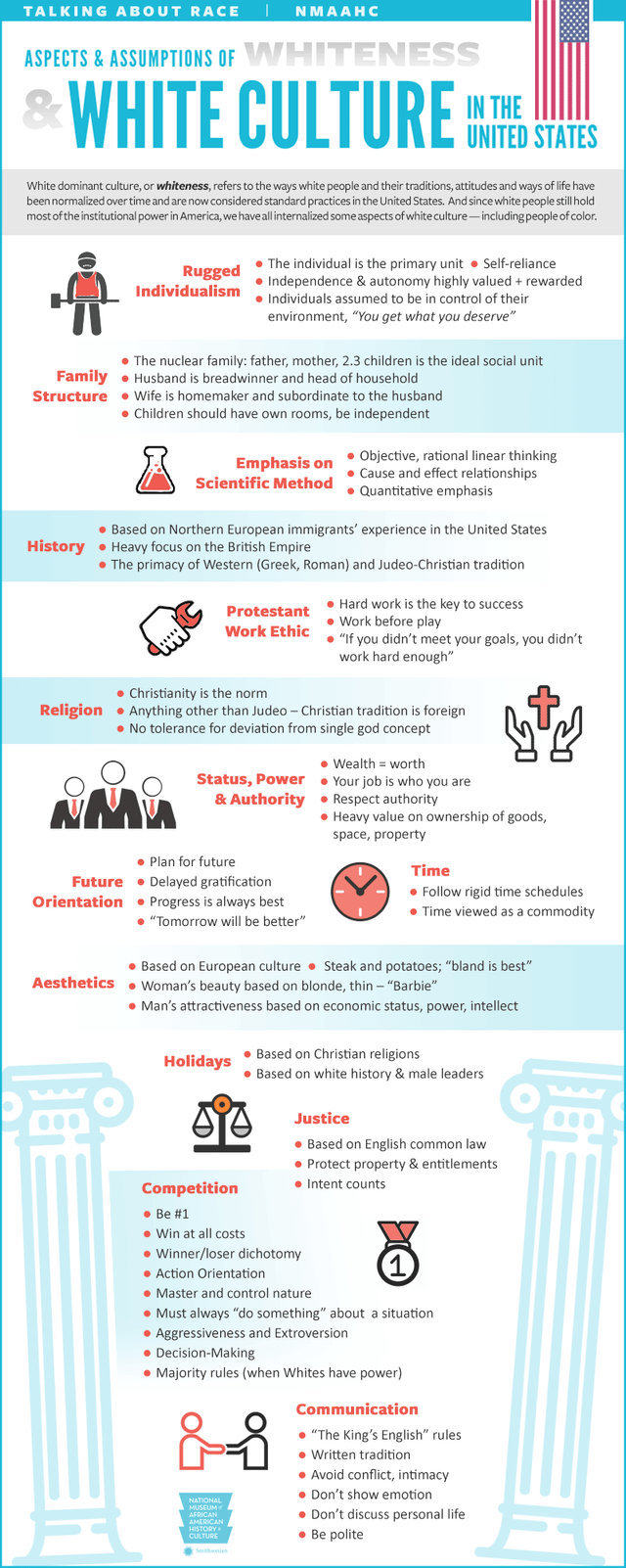
Objectivity is the greatest of sins in the world of progressive Puritanism. Despite its pretensions to philosophy, or perhaps because of them, the MASS toolkit becomes the inversion of what it attempts to deconstruct. It is the outcry of people raised in a national culture shaped by Christian Protestant tradition who reject that tradition, and enact its worst impulses in the rejection. One of these is the prohibition of questioning, which might loosen the grip of a wrong idea from someone’s mind, allowing them to see history from an objective point of view.
Emotion and intimacy are meant to overcome good sense. Ferguson is an example of the progressive appeal to sentiment in advance of knowledge. Michael Brown never once put his hands up or said “Don’t shoot”. He was violent, aggressive, and attempted to take a police officer’s gun. According to the MASS toolkit and its creators, however, what we feel about his death is more important than any forensic evidence that Brown died of poor impulse control and criminal misbehavior.
Objectivity is just one of the goals of historical research and writing. Narrative is another, and tension always exists between the two goals. Read any book of history and there will be a story told. The best histories make the best use of objective facts to tell a story. A history of feelings will never be objective, though. Much of the modern progressive education system is geared to keep the kids in their feels with “Social Emotional Learning” so they adopt this value-system. Radical museum curators want to do the same with museums.
Gill started his questions by asking Hartig if the goal of history is to be objective. Hartig affirmed the Smithsonian strives for objectivity and nonpartisanship. Then Gill highlighted that the toolkit lists objectivity as a core aspect of white supremacy culture, and asked Hartig whether the Smithsonian promotes that culture. Hartig tried again to dodge accountability for the toolkit, which her institution’s staff used for trainings under her leadership in 2019-2020.
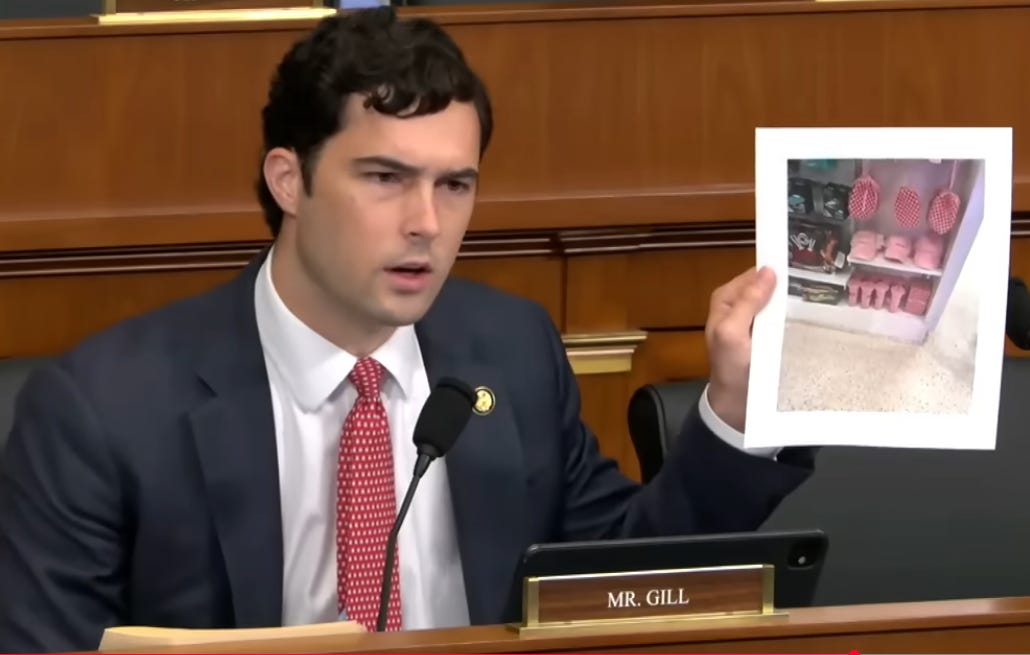
Rep. Gill had more current examples in mind, however. “Is Mickey Mouse racist?” After Hartig said no, he referenced a Smithsonian exhibit linking Mickey Mouse to “vestiges of longstanding traditions of blackface minstrelsy.” He followed up on whether that is racist. Is Mickey Mouse rooted in racism, or minstrelsy? The historical answer is a purely aesthetic one. If Cleopatra can be black, Mickey Mouse can be a white man mocking black people. Cultural vandalism can be institutionalized.
Then Gill confronted Hartig with “Latina Power” merchandise on the shelves at the Smithsonian gift shop. Hartig had to explain what it meant and answer whether it was appropriate. She defended the museum store for reflecting the richness and diversity of the community. Rep Gill did not follow up with the obvious implication that ‘White Girl Power’ merchandize would be instantly denounced as racist. The museum instead has double standards, which is also racist.
The only way that Anthea Hartig and the Smithsonian can stop being white supremacy culture is by ending their curation of ‘white supremacy culture’ as a legitimate idea. It has no foundation, least of all in the Smithsonian itself. Mickey Mouse never had to be problematized. It was a choice made by cultural and historical vandals doing politics.