
These Protests In Tehran Might Be Different
History is suggestive of possible change in the air

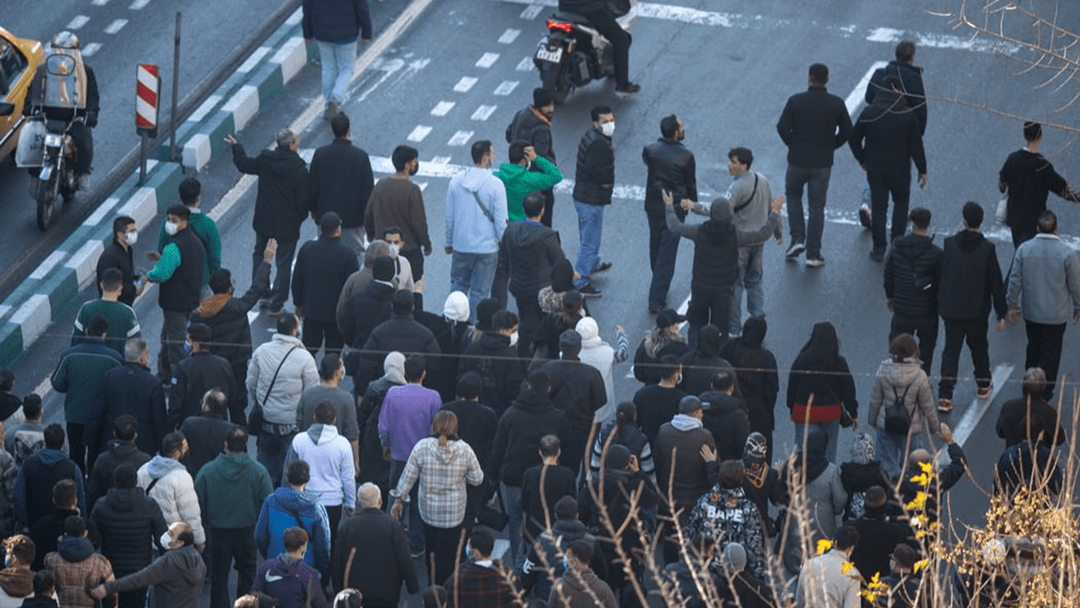
Several bazaars went on strike and carried out demonstrations in the center of Tehran yesterday, clashing with security forces. The proximate cause of the protests is a sudden drop in value of the rial. The governor of Iran’s central bank resigned today. However, the conditions surrounding the protests are the long-term consequences of the regime, the fruit of decades of clerical misrule. Put simply, the ayatollah is losing control, and these bazaaris on the street are further evidence of that.
There have been numerous waves of protest across Iran in recent years, none of which resulted in the fall of the regime. However, this event may herald a new level of risk for Khamenei and any hope of his son inheriting his office of supreme jurist. People are reportedly chanting the name of the son of Pahlavi in the streets as stores shutter for a second day. I do not have a crystal ball, but history is suggestive.
The left will tell you it was they who struck the revolutionary blows, and they took part, but they were never in charge of the Revolution. It was the bazaar, the ancient commercial guild in Tehran, which gave crucial support to the 1979 revolution, enabling the strikes that forced Shah Reza Pahlavi into exile. Demonstrators hid from the Shah’s secret police in the labyrinth of the Grand Bazaar, planned their actions, enjoyed free food and drink. But by 2018, the bazaar was “seen as an institutional hub for conservative politics in Iran”, in the words of Arshin Adib-Moghaddam.
Ayatollah Ruhollah Khomeini maintained his political alliance with the bazaar until its electoral wing, the Islamic Coalition Society, or Jam‘iyat-e Mo’talefeh-ye Eslami, became inconvenient after the 1988 elections. The bazaar still came off much better than the Iranian left, which was entirely wiped out by that time, being imprisoned, murdered, or forced into exile. The bazaaris maintained a strong sense of solidarity as well as their economic autonomy, even as their ranks were shorn of leftists, for they have maintained their monopoly over the urban retail economy.
The bazaar has demonstrated independence before, but only in pursuit of its own agenda. In 2008, for example, the bazaaris held strikes in a number of cities, including Tehran, to protest a value-added tax that the elected president had imposed without consulting them. Mahmoud Ahmadinejad suspended his VAT for two months and held his talks with the bazaar. Happily consulted, they sat out the ‘Green Movement’ in 2009 that protested the sketchy reelection of Ahmadinejad.
Something has changed, however. The Grand Bazaar hosted a demonstration at the end of December in 2024 to protest “soaring inflation and power shortages”, which “triggered protests in other commercial hubs in the capital”. Users of the X social media app have noticed the dead shah’s exiled son Reza Pahlavi trending in the last year as anticipation of a restoration grew outside Iran, largely on speculation brought about by the bazaar’s involvement.
While the bazaar is not about to overthrow Islam, the power structure of the Islamic Republic has been considerably weakened. This was evident when Tehran began to retreat from its strategic positions across the Middle East, telling their military advisors in Yemen to come home in April. A senior Iranian official indicated that support for regional proxies was being reduced in the face of threats from the new Donald Trump administration. Proxy groups in Iraq also lost their support and advisors. Six militia commanders in Baghdad told Reuters that their Iranian backers had backed down in the face of Trump administration threats.
Trump had announced a “National Security Presidential Memorandum (NSPM) restoring maximum pressure on the government of the Islamic Republic of Iran, denying Iran all paths to a nuclear weapon, and countering Iran’s malign influence abroad.” The new administration “will not tolerate Iran possessing a nuclear weapons capability,” the fact sheet emphasized. This hard line was enforced with B-2 bombers and specially-designed penetrating bombs.
By that time, however, Israel had already made a joke of Iranian air defenses, attacking the regime with impunity. The Islamic Republic is very good at retail terrorism but very bad at pitched battles. The clerics have never trusted the military with any political power, so they created the Islamic Revolutionary Guards Corps (IRGC), a multi-service parallel military force that serves the political purposes of the regime, making its budget larger than that of the Islamic Republic of Iran Army (AJA, or Artesh), which exists to defend Iran.
Operation Rising Lion targeted the leadership of the IRGC, but not the leadership of the regular armed forces of Iran. The neutrality of the regular forces in 1979 doomed the Pahlavi monarchy, though it did not gain the trust of the mullahs, so perhaps Israel hoped to fracture the Islamic Republic internally by exposing the hollow state of Iran’s theocratic governance to the world. On its second day, the IAF campaign hit the domestic oil and gas infrastructure around Tehran. By leaving the export terminals alone, the IAF confined the economic impact of this retaliation within Iran. They also hit the Farda motors automotive factory in Boroujerd, Lorestan Province, which has no direct military connection but certainly raised domestic automobile prices.
Notably, the Iraqi militias sponsored for so long, and at such cost, by the Islamic Revolutionary Guards Corps (IRGC) of Iran were completely out to lunch while Israeli F-35s flew through Iraqi airspace with impunity to bomb targets inside Iran. The Trump administration meanwhile pressed the Iraqi government to integrate those militias into the regular forces, and Iraqi president Mohammed Shia al-Sudan was keen to remove the threat they represented to his own power. “These groups have been shaped by previous struggles for influence in Iraq between the U.S. and Iran, emerging warier of involvement in external conflict and more independent of external backers,” The New York Times explained.
“The Iran-linked militias have also become central players in the Iraqi government, earning billions of dollars from state coffers, operating extensive business networks and holding more power than ever before.” Why put the good times at risk on behalf of Tehran? “If their standing took a blow, it could put in jeopardy about $3.5 billion allocated in the Iraqi budget, according to the finance ministry, to pay militia salaries and provide other forms of support.”
Nor did Iran push back. Commander Esmail Ghaani of the Quds Force, which gives direct support to Iran’s proxies, reportedly encouraged the militias to keep a low profile for fear that the US and Israel would destroy them, eliminating the IRGC’s influence in the country entirely. With their foreign proxies unable to protect Iran from Israel or the United States, the entire defense strategy of Tehran was left in ruins, and the regime exposed, at the very moment when bills were coming due.
“We must apologize to the people that we are in a situation where they have to bear the brunt,” Masoud Pezeshkian, the elected president of Iran, said of the electricity blackouts that were hammering the economy in November 2024. “God willing, next year we will try for this not to happen.” But the rolling blackouts kept happening. For despite huge oil and gas reserves, the clerics managed to create an energy crisis through underinvestment, populist energy subsidies, corruption, and copious mismanagement.
More challenging still is the water crisis brought on by five years of drought and all the usual problems of clerical rule. “The government announced this week that many reservoirs, particularly those that supply the capital, Tehran, with drinking water, were drying out,” the New York Times reported this July. “Water supplies for Tehran are predicted to run out in just a few weeks, officials said, pleading with the public to reduce water consumption.”
The Tehran Province Water and Wastewater Company announced this week it had reduced water pressure to such low levels that in Tehran — a city of 10 million people, many living and working in high-rise buildings — water could not flow above the second floor of apartment buildings.
Despite severe rationing, drought has lowered reservoirs to one-tenth of capacity or less. President Masoud Pezeshkian declared a dire state of emergency. “If it doesn’t rain in Tehran by late November, we’ll have to ration water. And if it still doesn’t rain, we’ll have to evacuate Tehran”, he said. Making the problem worse, of course, are all the illegal wells that the IRGC drills everywhere to meet its own needs, reducing the aquifers. Overdevelopment, intensified agriculture and industry, and too many dams built in a fit of stimulative spending all play a role in the disaster.
Of course, even if the water runs out, and the lights go out, the regime will still not fall by default. On the contrary, the clerics and the IRGC will make their grip even tighter as they preside over the collapse. No one can impose change from outside and no one should try. Let the bazaaris decide whether this time is the right time. They will know when it is time. Historically, they always have, and then Iran has always gone their way.
What 'The Left' Still Gets Wrong About Iran
In his 1993 book Khomeinism: Essays on the Islamic Republic, Ervand Abrahamian writes that what happened in 1979 was a “bourgeois revolution” all along. Shi’a clergy used leftist rhetoric to frame themselves as saviors of the people from the despotism of the Shah throughout the 1980s, leaving no room for a political left. Indeed, if there was a ‘reign o…


