
Republicans Just Need Direction
The party is ready to fall in line
The left wants to fall in love with their candidates, while the right wants to fall in line. Donald Trump is presidential proof for this truism of our American primary season politics. Each time he ran against a field of Republicans, he swept them all away quickly.
The selection of Kamala Harris as Joe Biden’s belated replacement nominee violated this formula. Barack Obama imposed a candidate from the left, and then the Democratic Party asked voters to simply fall in love with her because she was not Donald Trump. It did not work because that is not how the left works, when it works.
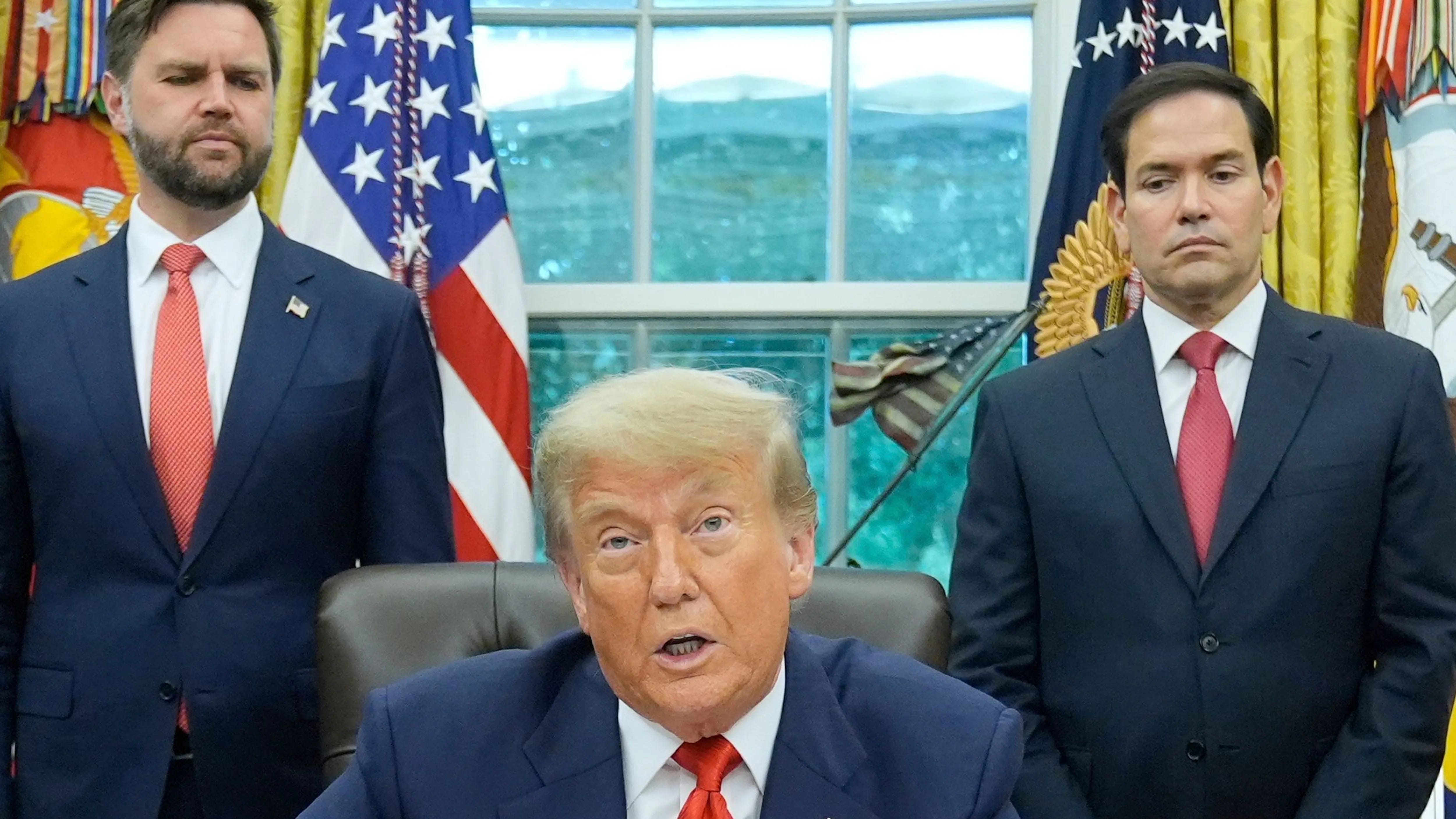
Now let us consider how the right works. The two men most likely to replace Donald Trump, and have the right fall in line during the early 2028 primary process, are J.D. Vance and Marco Rubio. At present, Rubio probably has an edge over Vance with the Republican base, while Vance is more popular with the podcasters that Trump just attacked.
In his dual role as Secretary of State and National Security Adviser, Rubio is an essential actor in Trump’s foreign policy. He comes from the ‘old school’ conservative political brand, and while he is not primarily seen as a cultural reactionary, he opposes gay marriage (or ‘supports traditional marriage’) as well as abortion limitations.
Of course, most Americans would be fine with a ban after 15 weeks, which is what Rubio has supported, so this latter view is actually mainstream. He may very well express a more nuanced view of the marriage question in 2028: ‘Obergefell is the law of the land whether I like it or not’ would not be a big rhetorical switch from his previous position, which proposed future court challenges. Rubio will have to reconcile with the reality that his party does in fact now attract the “normal gay guys”, as Vance says.
More to the point, Rubio can articulate what Trump’s policies have actually been, what informed them, and why he has taken action overseas. For example, here is a very concise (under two minutes) explanation of the war decision in Iran. Agree or disagree, Rubio makes the argument for a non-nuclear Iran perfectly and succinctly, just like a person in his role(s) should be able to do.
Here is video of J.D. Vance being vice-presidential in Hungary. Speaking to reporters, Vance explained that the dispute over whether Lebanon was included in the ceasefire arrangement had started from honest misunderstanding. The Israelis are willing to dial back their bombing campaign against Hezbollah to increase the chances of a successful ceasefire, Vance said. He articulates the policy and defends it, which is what a vice president should do.
Domestic differences are also less than they seem. Vance has been associated with ‘groypers’, the fans of shock jock podcaster Nick Fuentes, who are supposed to be the scary new threat to democracy from the right wing parts of the internet. In reality, Fuentes is all over the political map, throwing out opinions with little or no ideological underpinning to the whole, saying whatever it takes to keep his audience in thrall.
Buckley Carlson, Tucker Carlson’s son, is a deputy press secretary for Vance. However, Buckley is not Tucker, and Americans do not like the game of inherited guilt. I do not think the association will hurt him. Neither Vance nor Rubio has any connections to the insanity of Candace Owens or Alex Jones.
The reader may object that Jones gave Trump a platform once upon a time, and that is true. It also happened nearly seven years before the Sandy Hook verdict, and is utterly irrelevant to Vance or Rubio, neither of whom will carry Trump’s pre-2025 baggage. What they own instead are his second term actions in office. Megyn Kelly can try to get Vance or Rubio to disown and critique Trump’s specific policies, but she will never succeed in getting either of them to repudiate Trump.
Vance and Rubio will both want define themselves differently from Trump without a brutal public feud, so the 2028 Republican primary race will be the best season of The Apprentice ever. These two men will compete at rolling out their brands, Trump will make his feelings known, and then the fans of the show will make the call.
Within that prospective scene, there will not be much room for the crazies. Madness will be marginal to the outcome. That describes the portrait of 2028 that Republicans look forward to.
This midterm year, however, most Republicans are waiting on events. They want to see how the Iran war shakes out before committing themselves to an interpretation of it. Most of their Democratic opponents have already staked out adversarial positions that may not be tenable later. Open criticism of Trump is still a greater risk for them than the war is.
I fully expect the president to be vindicated in his expectation that Brigitte Macron wins her litigation against Candace Owens. Owens cannot derail the trial of Tyler Robinson with fake news about bullet forensics, and the accused will probably continue showing up to trial in his transgender tie to ensure we all know his motivation for killing Charlie Kirk. Whether these trials will play out before November 2026 is another question entirely.
Republicans face the usual midterm headwinds of the party in power, though as we noted this week, that pendulum effect has diminished in the polling. To the extent that the podcasting fringe elevated the Trump ticket before, they have no power in, or over, the Republican Party today. The pragmatic coalition that fell in line behind Trump — conservatives and tech — has not fallen apart.
What might be missing in November are the low-frequency voters who put Trump over the top in 2024, making up nearly half the electorate and breaking for him by 8 points. Historically, turning them out for midterms is very hard to do. Polling is soft enough to make this a real question for Republicans.
These are the MAGA voters who either never voted before, or missed prior elections in their voting history. They are younger and more diverse than past conservatives, and skew male. The Trump-Vance ticket put serious resources into winning these voters, and Turning Point Action targeted them as well. They are exactly the voters that turncoat podcasters seek to demoralize when they attack Trump. Shady news stories that sensationalize a perceived drop in support for Trump, turning variations in approval ratings into headline coverage, are propaganda aimed at demoralizing this demographic.
Donald Trump clearly intents to spend the campaign season rallying crowds to support the Republican candidates he supports and punish the ones he wants to punish. He still controls the party and disciplines its ranks. If the GOP seems to lack a unified direction right now, it is not for lack of a leader, or Trump’s approval ratings. He simply has not issued orders, yet.
November will likely become a battle for control of the US House of Representatives by a narrow margin. Being conservatives, the Republicans in the House are toeing the line for Trump and sticking to the plan. The leader of the party will tell them what the plan is. After November, the apprentices can begin sticking it to each other over whose plan the party will follow next.
The most disruptive aspect of the second Trump administration, from a partisan historical perspective, is not his foreign policy, but his control and discipline of the Republican Party. For better or worse, the future path of the GOP has largely been determined already for at least the next two years. This would actually be quite remarkable for a lame duck president, especially a Republican.
Normally, “hubris, burnout... scandal, party infighting, [and] lack of legislative success” define the last two years of a second-term president. The end of the Eisenhower administration was associated with the rise of the Goldwater wing. Reagan was subject to criticism from Republicans after the Iran-Contra scandal, which split traditional conservatives from pragmatists. George W. Bush lost Congress to Democrats in 2006, precipitating a bitter blame-game between neoconservatives, isolationists, and fiscal conservatives.
To be sure, the Strait of Hormuz is not fixed yet, and there is a long way to November. An economic disaster could doom Republican control of the House, and Democrats will do their best to goose turnout in any way they can. Politics is a blood sport, after all.
Still, this is impressive party discipline, even for the party known for discipline. Critics will call this discipline names, and call Republicans stupid and ignorant for following their leader, when in reality the GOP is behaving according to program, and Trump is just very good at leading them.
It remains to be seen how his apprentices work out, but neither of them is going to depart very far from the administration they both served, and the party seems almost entirely okay with it. The most historic result on Election Day might be what does not change.


