

Picking Cotton Is Not Racist
Only a racist would claim that it is
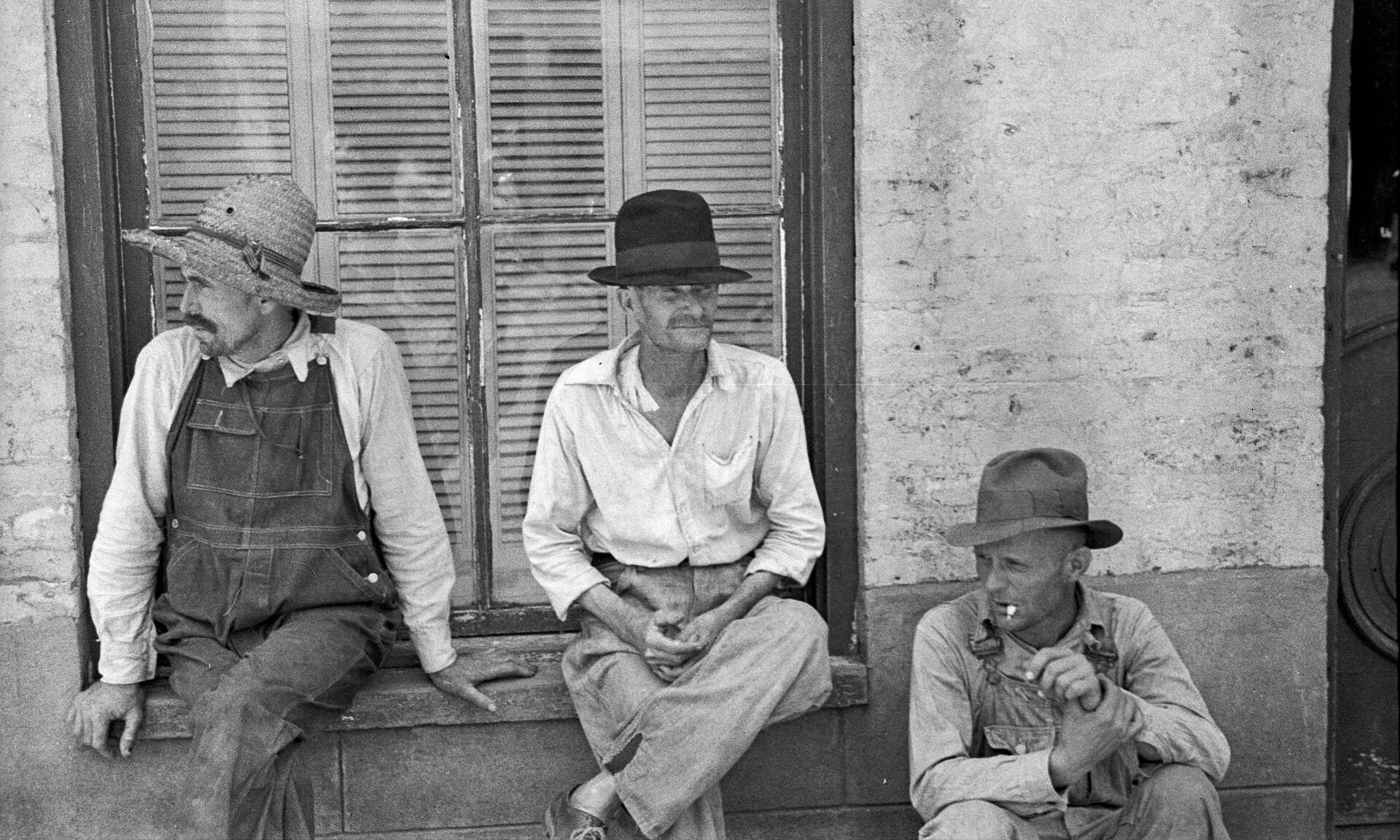
According to the Merriam-Webster Dictionary, the term ‘cotton-picking’ has been used as an intensifier since at least 1917. The entry also lists the word as “damned” due to its supposed racial connotations, but this is a modern projection on the past, because slavery had disappeared for two generations. By the time people said ‘cotton-picking’, two-thirds of sharecroppers were white. Old white people in the south still remember their cotton-picking family members.
Spare me your commentary on the Civil War and slavery, please, because sharecropping was a form of economic bondage that applied to blacks and whites in proportion to their share of the southern population for decades after it.
In T.S. Stribling’s The Forge (1931), which is set in north Alabama during and after the Civil War, Miltiades Vaiden and his sister harvest $2,000 worth of cotton themselves because no labor, free or slave, is available. Stribling based his book on a real family; the Scruggs & Vaden cotton gin still exists in Lauderdale County, though it is completely modern.
Despite many patents issued from the 1850s on, no one could produce a practical machine at scale to replace hand-picking of cotton until the 1940s. International Harvester was the first to do this. Even though the first fully-mechanized cotton field was in Clarksdale, Mississippi, the south was slower to adopt mechanized cotton picking than California, which passed the 50% mechanical tipping point in 1951. Hand-picking was not fully replaced in the south until the end of the 1960s.
‘Cotton-picking’ was a thing that poor white people did for almost a century and the phrase was always part of southern life. It was not exclusively or primarily used as a racial epithet, and it never referred to slavery. Rather, the ‘racial undertone’ only exists today in the minds of the recipients who want to hear it as racist.
Such people take umbrage because they wish to feel offended, not because the phrase was ever offensive. No one gets to skip over the parts of history that fail to conform to their priors. This is as true for the postwar sharecropping period as it is for the antebellum south.
So the reader will excuse me if I refuse to join in the tumult of stupidity over Rep. Jen Kiggans of Virginia agreeing with a radio show host that Democratic Rep. Hakim Jeffries should get his “cotton-picking hands off Virginia”. The NAACP is demanding that Kiggans apologize for saying “That’s right. Ditto” in response.
This is yet another fake affront from race-baiting activists. Kiggans was clearly agreeing with the sentiment that Jeffries should leave Virginia alone. Neither she nor Rich Herrera, who is Mexican-American, meant ‘cotton-picking’ as a racist epithet any more than Bugs Bunny did.
Rev. Cozy Bailey, President of the NAACP Virginia State Conference, made it very clear in his statement that politics are the actual purpose of the contrived backlash. Virginia Democrats broke the laws of the commonwealth to pass a redistricting plan that the state supreme court predictably overturned.
Bailey complained that “a large percentage” of the ‘Yes’ voters “are people of color, particularly Black people. And so we are very sensitive in this moment to anything that continues to be oppressive or suppressive to our thoughts.”
Translation: I am being overly-sensitive and feigning oppression because I am actually mad about something else. Literally no one is oppressing or suppressing Bailey’s thoughts, or Jeffries’s thoughts, or anyone else’s thoughts with the phrase ‘cotton-picking’. On the contrary, it is Bailey who wishes to oppress and suppress the spoken thoughts of other people.
Kiggans gave a statement to WDBJ7’s sister station in Richmond, WTVR, agreeing that Herreira “never should have used that language, and of course that’s not the sentiment I was agreeing to.” This was not good enough for Bailey, and we can hope Kiggans will ignore calls for further apologies, because America is exhausted with political actors playing the race card on the flimsiest of pretexts. Cotton is not racist. It is a plant. Picking cotton is not racist. It is agriculture.
Excellent read. Johnny Cash spoke about picking cotton as a child and how, as an adult, he always had sympathy for those he met whose hands were covered in the scars of a cotton picker as his were. A tough life for poorest of the poor. Curiously, when I was growing up, we always used cotton pickin' to talk about something good, like that cherry pie was cotton pickin' good.